
Coastal Living and Outdoor Access
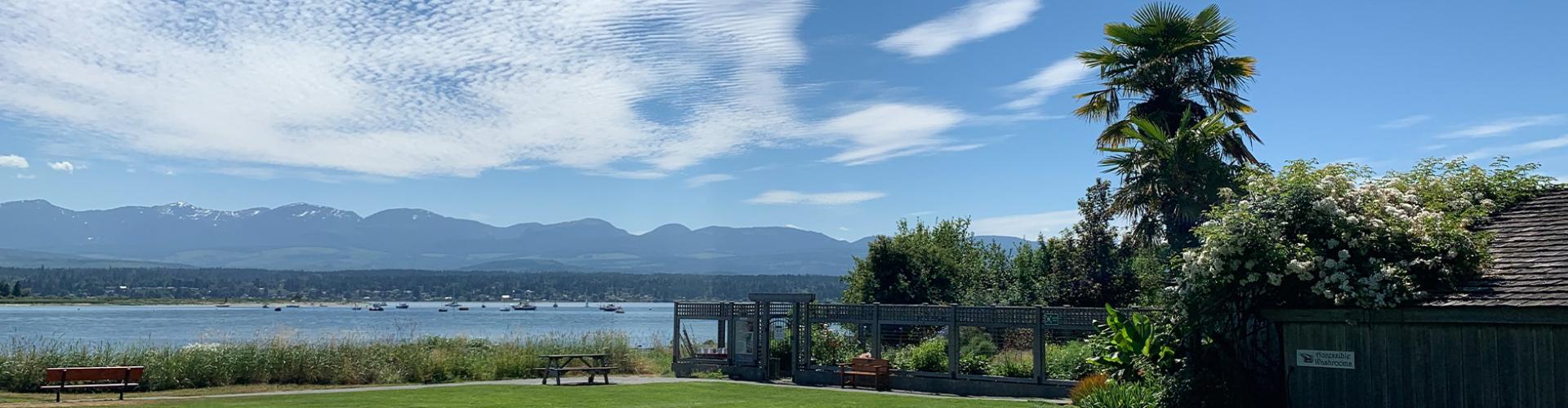
In Comox, outdoor access is woven directly into the town’s layout. The shoreline is not a destination outside the community. It is the edge of it.
The Comox Marina and Marina Park anchor daily life near the core. Boats launch early, walkers trace the waterfront paths, and open harbour views shape the rhythm of the day. From downtown, it is a short walk to the water. Fisherman’s Wharf, community docks, and public gathering spaces create a working harbour atmosphere that feels active without being crowded.
Goose Spit extends into the Salish Sea as a defining feature of the landscape. Beach walks, paddleboarding, windsurfing, and sunset views are part of ordinary routine rather than special occasion outings. The shoreline continues outward through Kin Beach, Kye Bay, and Air Force Beach, each offering wide tidal flats, mountain backdrops, and direct access to the water within minutes of residential neighbourhoods.
Filberg Park adds another layer to the waterfront experience. Mature trees, open lawns, and seasonal community events reinforce how closely recreation and civic life intersect. Many streets and subdivisions in Comox terminate near shoreline access points or green space, embedding outdoor activity into daily movement.
Living in Comox means the harbour, beaches, and parkland are not separate from town life. They define it. Outdoor access here is immediate, coastal, and continuous, shaping how residents structure mornings, afternoons, and long summer evenings.

Community, Character, and Coastal Identity
Comox carries a distinct cultural rhythm within the Comox Valley. Rather than a concentrated arts district, it offers a waterfront-centred community life where gatherings feel local, participation feels natural, and the harbour acts as a social anchor.
Downtown Comox is compact and walkable, with tree-lined streets that lead directly to the marina and Marina Park. Independent cafés and long-standing restaurants shape daily routine as much as special occasions. Blackfin Pub, Avenue Bistro, Church Street Taphouse, Milanos Coffee, and Benino’s operate as informal gathering places where familiarity defines the atmosphere.
Visual arts maintain a steady presence through the Pearl Ellis Gallery, operated by the Comox Valley Community Arts Council, which hosts rotating exhibitions and community programming throughout the year. The Filberg Centre supports workshops, community groups, and local events, reinforcing how civic space is woven into daily life rather than isolated from it.
Annual traditions anchor the calendar. The Filberg Festival, one of Western Canada’s largest juried outdoor arts festivals, transforms Filberg Park into a multi-day celebration of artisans and live music each summer. Canada Day at Marina Park brings the waterfront to life, while Nautical Days reflects Comox’s long-standing marine identity. The Comox Valley Farmers Market and seasonal waterfront concerts keep activity centred near the harbour throughout warmer months.
The marina itself is more than infrastructure. It is a working and recreational hub, connecting boaters, fishing charters, the yacht club community, and shoreline walkers within a single space. Walk from downtown storefronts to the docks in minutes and the integration between commerce, recreation, and ocean becomes tangible.
While larger venues such as the Sid Williams Theatre and Comox Valley Art Gallery sit just minutes away in neighbouring Courtenay, residents experience the area as a connected cultural corridor rather than separate municipalities. Comox contributes coastal atmosphere, historic parkland, and waterfront gathering space to that regional ecosystem.
For buyers exploring Comox real estate, the appeal is not metropolitan scale. It is access. Festivals that feel approachable. Restaurants where regulars are known. Events where participation outweighs spectatorship. Culture here is embedded in everyday coastal life rather than staged at a distance.

Education, Healthcare, and Employment in Comox BC
Comox functions within the broader service and employment framework of the Comox Valley, while also hosting one of the region’s most significant institutional anchors. For buyers considering living in Comox BC, daily convenience and long-term stability are closely tied to access to schools, medical care, and a diversified employment base that includes a strong military presence.
Public education is provided through Comox Valley Schools (School District 71), which serves Comox, Courtenay, Cumberland, and surrounding communities. Within Comox, schools such as École Puntledge Park Elementary (French Immersion), Brooklyn Elementary, and Highland Secondary support local families, while additional elementary and secondary options are accessible within minutes across municipal boundaries. The steady presence of military families contributes to consistent school enrollment and community turnover.
Healthcare access is anchored by the North Island Hospital, Comox Valley campus, located between Comox and Courtenay. Opened in 2017, this modern acute-care facility supports regional healthcare delivery and remains one of the largest employers in the area. Its central placement ensures that most Comox neighbourhoods are within a short drive of emergency and specialist services.
19 Wing / CFB Comox represents a major regional employer and a defining element of the local economy. As one of Canada’s key air force bases, it supports active service members, civilian staff, and a significant number of military families. This presence contributes to stable public-sector employment, sustained housing demand, and long-term economic resilience. The base also supports aviation-related industries and air service infrastructure tied to the Comox Valley Airport.
Beyond military and healthcare anchors, the broader regional employment base includes construction and development, tourism and hospitality, marine services, agriculture and aquaculture, education, air service support, and an expanding base of remote and professional services work.
For buyers evaluating Comox homes for sale, the advantage lies in access to full regional infrastructure combined with the economic stability that comes from diversified sectors and a strong federal institutional presence. Comox remains primarily residential in character, yet closely integrated with the employment and service drivers that support long-term property stability.

Access Expands Beyond the Harbour
Beyond Comox’s shoreline, the geography expands quickly.
Mount Washington Alpine Resort rises roughly 30 minutes west, bringing downhill skiing, Nordic trails, alpine hiking, and deep coastal snow in winter. In summer, ridgelines open to views across the Strait of Georgia and inland toward the Beaufort Range, reinforcing how close elevation and ocean sit within the same valley.
To the west, Comox Lake provides expansive freshwater access for swimming, paddling, boating, and lakeside recreation. South and west, Cumberland’s trail network draws mountain bikers and hikers year-round, while Seal Bay Regional Park preserves protected coastal forest and quiet shoreline paths within minutes of town.
North along the coastline, Kitty Coleman and Miracle Beach introduce long, open shorelines and broad tidal flats framed by mountain backdrops. The transition from marina to rural coastline happens quickly. Development thins, lots expand, and the landscape begins to feel more open and less structured.
Further west, Strathcona Provincial Park anchors Vancouver Island’s interior. Granite peaks, glacier-fed lakes, alpine camping, and backcountry routes define the terrain beyond the valley floor.
Living in Comox means these shifts occur in short intervals. Harbour to lake. Beach to alpine. Town to wilderness. The proximity is not occasional recreation. It shapes how residents plan weekends, structure seasons, and define the rhythm of daily life.

Neighbourhoods in Comox BC
Comox is geographically compact, yet small shifts in location significantly influence lifestyle. Ocean access, walkability, lot size, and school proximity can vary within minutes. Understanding these distinctions is central when exploring Comox real estate.
Downtown Comox and the Marina district appeal to buyers who prioritize walkability and waterfront access. Character homes, cottages, and selective infill builds sit within blocks of Marina Park, cafés, and shoreline pathways. Limited inventory and proximity to the harbour support long-term desirability.
The Filberg Park and Foxxwood areas are established residential neighbourhoods known for mature trees, larger lots, and quiet streets. Homes range from mid-century construction to updated family properties. These pockets offer stability due to their balance of privacy and central access.
The Comox Peninsula shifts the scale. Acreages, hobby farms, and larger parcels extend toward Kye Bay, Air Force Beach, and Point Holmes. Buyers seeking space, privacy, and a coastal rural setting often focus here while remaining minutes from town services.
North East Comox, near Highland Secondary and Brooklyn Creek, offers practical subdivisions with integrated parks and school access. It appeals to families seeking residential calm within municipal infrastructure.
While technically in Courtenay, Crown Isle sits between the two communities and functions as part of the same daily ecosystem. This master-planned golf course neighbourhood features executive homes and patio residences with strong airport and hospital proximity, making it a frequent crossover consideration for Comox buyers.
Beyond town limits toward Little River and the north coast, rural properties expand again into larger parcels and agricultural land while remaining within short driving distance of amenities.
If you would like a more detailed breakdown of specific streets, pricing patterns, school catchments, or recent sales activity within these neighbourhoods, a tailored overview can provide clarity before narrowing your search.

Transportation and Connectivity in Comox BC
Comox offers strong regional connectivity while maintaining a quieter coastal pace. Located on the eastern edge of the Comox Valley, the town benefits from immediate access to major infrastructure without the traffic intensity of larger centres. For daily life, most amenities within Comox are reachable in under 10 minutes, reinforcing convenience at a small-community scale.
Highway 19 runs just west of Comox through Courtenay, connecting the valley south to Nanaimo in approximately 90 minutes, Victoria in roughly 3 hours, and north to Campbell River in about 45 minutes. For residents, this positioning allows efficient regional travel while preserving a residential atmosphere at home.
The Comox Valley Airport (YQQ) sits directly adjacent to Comox and provides regular service to Vancouver, Calgary, Edmonton, and other Canadian hubs. For frequent travellers, proximity to the airport significantly reduces reliance on mainland terminals and shortens overall travel time. Its integration with 19 Wing / CFB Comox also reinforces long-term regional infrastructure stability.
For ferry access to Metro Vancouver, BC Ferries terminals in Nanaimo are typically 90 minutes south by car, offering direct sailings to Horseshoe Bay and Tsawwassen. Within the valley, regional bus service, cycling routes, and compact neighbourhood design support short commutes and active transportation, particularly between Comox and Courtenay.
Living in Comox BC means balancing connectivity with coastal livability. Residents can access larger urban centres when needed, yet return home to a community where traffic is moderate, commute times are short, and daily movement remains efficient.

Climate and Seasonal Living in Comox BC
Comox experiences a temperate coastal climate typical of eastern Vancouver Island, shaped directly by its position along Comox Harbour and the Strait of Georgia. Winters are generally mild compared to most Canadian regions, with daytime temperatures often remaining above freezing at sea level. Snowfall does occur but is typically limited in duration, with accumulation less frequent than in inland or higher elevation areas.
Rainfall is a defining seasonal feature. Late fall and winter bring extended periods of rain, overcast skies, and shorter daylight hours. Annual precipitation is notable relative to many interior Canadian cities, and buyers relocating from drier climates should expect a visibly wetter winter season. In Comox specifically, exposure to salt air and coastal winds can influence exterior home maintenance, making roofing, drainage, siding condition, and landscaping practical considerations.
Spring tends to arrive early, with flowering trees and garden growth beginning ahead of much of the country. Summers are typically warm, dry, and moderated by ocean breezes, supporting boating, beach access, cycling, and consistent outdoor activity. The surrounding mountains and marine influence help regulate temperature extremes, resulting in fewer prolonged heat waves and minimal deep cold snaps.
For many residents, seasonal living in Comox means embracing distinct coastal rhythms: quieter, rain-washed winters balanced by long, light-filled summer evenings along the marina and shoreline. Climate shapes everything from gardening cycles to exterior home care, while reinforcing the outdoor lifestyle that defines daily life in this waterfront community.
Filters Reset
Save Snapshot
View Results
COMOX MARKET SNAPSHOT
(MAY 06, 2026 - JUN 05, 2026)
COMOX MARKET SNAPSHOT
?
Sold Listings
?
Average Sales Price
?
Average Days on Market
Comox, BC Homes for Sale
Browse detached homes, waterfront properties, townhomes, and new developments in Comox, BC. Listings update in real time through the local MLS. Refine by price, property type, and neighbourhood to find homes aligned with your lifestyle in the Comox Valley.
The Comox housing market is known for limited inventory and strong demand driven by waterfront proximity and 19 Wing CFB Comox. Detached homes dominate the market, with premium pricing near the marina and ocean-view corridors.
Looking for something specific? Contact us for off-market opportunities and tailored searches in Comox.
More
Plan Your Move in Comox
If you are considering buying or selling in Comox, understanding current inventory levels, recent comparable sales, and neighbourhood-specific demand patterns can provide clarity before making decisions. Market performance in Comox is often shaped by limited supply, waterfront proximity, and long-term ownership trends.
Because inventory can remain tight in desirable pockets near the marina, Point Holmes, and established residential corridors, timing and preparation matter. For a personalized market review aligned with your goals, request a confidential consultation or tailored property analysis.